
Tree cabling provides added support when structural stability becomes a concern.
Tree cabling is used when a tree shows signs of weakness. Heavy limbs, split trunks, or uneven growth can stress a tree’s structure, making it more vulnerable during high winds or storms. Without proper support, these structural issues can lead to limb failure, property damage, or premature tree removal. Tree cabling helps redistribute that stress and reduce the risk of failure by introducing flexible supports that stabilize key areas.
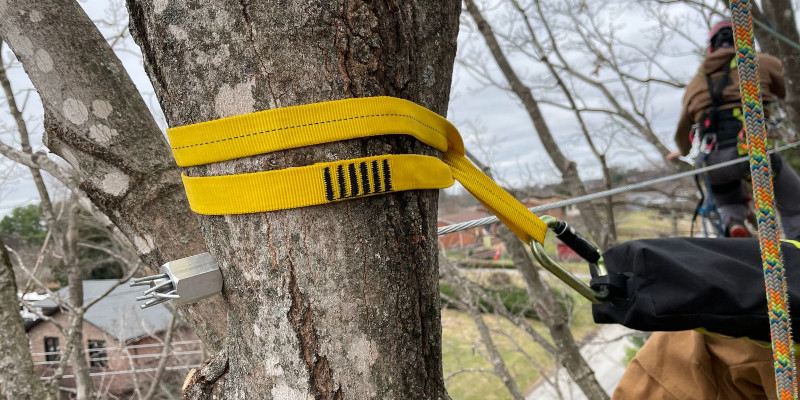
When you consider tree cabling, the goal is preservation rather than removal. Our team evaluates the tree’s structure, health, and surrounding environment to determine whether tree cabling is an appropriate solution. We look at limb angles, visible cracks, past storm damage, and any movement patterns that may indicate instability. This allows us to reinforce vulnerable areas without restricting the tree’s natural sway in the wind, which is vital for long-term health.
Tree cabling is often recommended for mature trees near homes, walkways, or driveways where falling limbs could pose a serious hazard. These trees may otherwise appear healthy but carry hidden risks due to weight distribution or old storm damage. By adding internal support, tree cabling helps prevent sudden failure while maintaining the tree’s canopy and overall shape. It’s a way to retain shade and beauty while minimizing the chance of unexpected issues.
Tree cabling works best when installed before visible damage worsens. Early intervention can extend a tree’s lifespan, reduce the likelihood of emergencies, and give you time to manage its long-term health. Routine monitoring ensures the cables remain effective and don’t interfere with new growth.
Our team at Settle Tree Services provides tree cabling solutions for properties in Maryville, Tennessee, where stability and preservation are both priorities. Our approach focuses on practical reinforcement, safety, and tree care tailored to your landscape’s specific needs.
At Settle Tree Services, we offer tree cabling services in Maryville, Alcoa, Corryton, Seymour, Powell, Sevierville, Hardin Valley, Farragut, Concord, Knoxville, Kodak, Karns, and Halls Crossroads, Tennessee.